
Impartiality is not only hearing things you like and agree with
What we learned this week #23
An earlier email than usual this week, and a bit different: it’s on one subject. It’s been a busy week in Westminster – please don’t call it WILD – and it has sparked a strange discourse about how it’s all the media’s fault. Which I wanted to address before I changed my mind/got distracted/go on holiday. Feel free to tell me I’m wrong in the comments. Everyone else will.
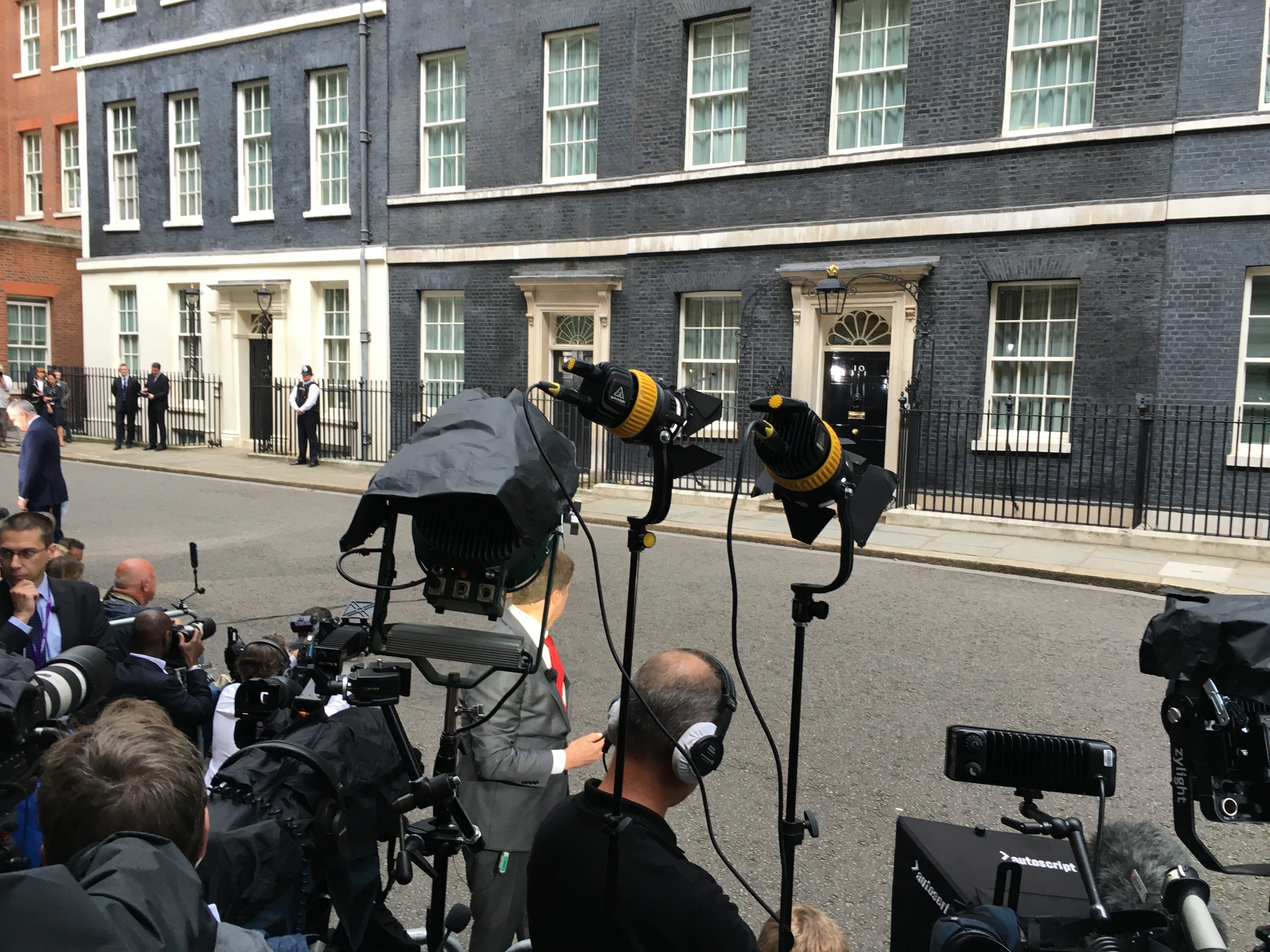
After every action, a re-action. After Keir Starmer survived an attempted coup by one of his most senior colleagues, revisionism is kicking in to suggest it was a media fantasy by out-of-control Westminster journalists.
I did not come here to defend every utterance of every political journalist in SW1. They can do that themselves. And no doubt you are just about to reach for that well-clipped example of outrageousness which blows my argument out of the water.
But if all was well in the state of Westminster, the prime minister would still have a chief of staff and a director of communications in Number 10, a cabinet secretary he believes in and a Scottish leader on his Christmas card list. But he doesn’t, and it isn’t.
On Monday I was accused online of getting carried away during a two-hour programme which included a Labour MP calling for the PM to resign, Anas Sarwar’s press conference, and four Labour MPs, including one cabinet minister, defending the PM. Dramatic? Of course it is.
I faced the same criticism on the day Angela Rayner resigned and Keir Starmer was forced into an unwanted emergency reshuffle.
There is journalistic value in explaining to an audience that something big is going on, which could affect the survival or direction of the government, and therefore the lives of the people who voted for it, and live under it.
When Labour MPs text me about their happiness or unhappiness with their own government, I think it is useful to share those insights with an audience trying to understand how politics works. I’ve done the same with Conservative MPs too.
It’s worth spelling this out: impartiality is not only hearing things you like and agree with. Most days someone will text my 5 Live show to rage “what are you doing allowing this Labour/Tory/Lib Dem/Green/Reform person to say these things?” It is not biased to hear from, and challenge, a range of views. In fact it’s the opposite.
A swirling scandal involving Epstein, the US ambassador, government secrets, and the prime minister’s judgment is obviously news. Voters have been left shocked and appalled; no wonder the sentiment is shared by some in Labour.
If you’re a supporter of the prime minister, you are not likely to agree with Anas Sarwar, but that does not mean that Anas Sarwar does not exist.
If there really was no threat to the prime minister, why was a war room created around the cabinet table where loyal aides pressured every senior minister to post supportive comments on social media?
If no cabinet minister is hoping to replace the prime minister, why will they not say they do not want to be PM? Ask Andy Burnham, Wes Streeting, Shabana Mahmood - as I have done - and none rule it out, instead giving formulations of “who knows what the future holds”, “there is no answer to that question helpful to the PM”, and “everyone in politics has thought about being PM” respectively.
Predictions in politics are for fools. And I know, because I am one. When I wrote a weekly newspaper column I made a fool of myself many times, declaring this politician a busted flush before they went to the top of the greasy poll or predicting that politician would soar before they crashed and burned. The one time I got it right - wondering whether Theresa May was as good as all that before she went on to lose her majority - was probably the exception that proved the rule.
There is a difference, though, between a journalistic judgment and a political opinion. “The prime minister has had a terrible day” is the former, but to a supporter of the prime minister it can sound, incorrectly, like the latter.
“The prime minister is in real trouble and could be gone by the end of the day” is true at the time. That he was not gone by the end of the day does not mean it was wrong to say it. (Although there are no doubt examples of hyperbole which stretch this defence to destruction.)
“The prime minister is completely useless and should resign” is a perfectly valid political opinion, one that can be expressed by newspaper columnists and pundits. And, in increasing numbers, Labour MPs. “The prime minister is completely brilliant and should reign forever,” is also a perfectly valid political opinion.
That some people wish everything was OK does not mean the opposite view is not real. When Ed Miliband says “yesterday was a moment of peril for the Prime Minister” and that the Labour Party “looked over the precipice” is he being outrageously biased against the government? Or stating a political reality?
I’ve been at the BBC now for 18 months. Despite the predictions of some former BBC employees - who made their names and fortunes inside it before growing their fortunes by slagging it off from the outside – I have not been tied up in knots by its bureaucracy and obsession with impartiality.
But it is an obsession. Rightly. I work with good colleagues every day who have those conversations about how to cover this story, or even whether to cover that story. It’s a balance. It’s happening in real time. These are human beings making decisions about how to report on the actions of other human beings fairly, at speed, in a way which conveys importance to a wide and varied audience. I’m glad it exists, and I’m glad to be a small part of it.
This week’s revisionism from some of Starmer’s supporters – including former spin doctors, biographers, cheerleaders and others whose influence depends on access to power – about what was clearly a real, if-shortlived, threat to the PM’s future serves nobody except those who want to undermine trust in all media.
“I don’t remember any of you kicking Johnson the way you do Starmer,” one person told me online. “It’s disgusting.”
I think Johnson, Truss et al might take issue with the idea they faced no media scrutiny or speculation about their futures.
On Monday I tweeted a joke:
“Number 10 loses comms directors like I lose phone chargers”.
To which one person responded:
“I’m blocking and reporting you for that flippant comment .. be warned. I’m well connected. You will be very sorry.”
Sometimes I wonder if it is not just Westminster hacks who need to put things in perspective.
Listen to URGENT QUESTIONS on BBC Sounds, Apple Podcasts or Spotify and let me know what you think.
Thanks for reading this far, if you have. If you haven’t, nevermind. Do hit the like button. Or tell me I’m wrong in the comments.
Can I point out I've never lost a phone charger?
Can I point out that I have never lost a phone charger or a coms director.